




The short answer: The best pajamas for eczema-prone skin are made from natural cellulose fibres that wick sweat off the skin and re-dry fast, breaking the sweat-trigger cycle behind most night-time flares. TENCEL™ Micro Modal absorbs around 50% more moisture than cotton, is rated around 2x softer in handfeel testing, and is certified to OEKO-TEX® STANDARD 100 (Lenzing). Zed Sleep's ZedCore™ fabric, an 89% TENCEL™ Micro Modal blend developed and tested with Loughborough University, is designed for sustained, low-friction contact through the night.
If you have woken at 3am scratching, the fabric against your skin is half the answer. The rest of this article explains the other half, including why sweat is doing more damage than you might think and what to look for in a pajama that actually calms reactive skin.
Atopic dermatitis affects an estimated 7.3% of adults in the United States, with similar prevalence reported across the UK and other developed countries (Chiesa Fuxench et al., 2019, Journal of Investigative Dermatology). For most adults living with it, the flares do not respect office hours. They show up most aggressively at night, when the skin barrier is at its weakest and the wrong fabric makes everything worse.
Most pajamas marketed for sensitive skin solve the easy part. They feel soft when you put them on. Then they trap sweat, rub against inflamed patches, and shed chemical residues from finishing treatments that your skin reacts to. By 3am, the pyjama is part of the problem.
This guide covers the fabrics, fit details, and certifications that actually work for eczema-prone and sensitive skin, based on Lenzing fabric data, peer-reviewed dermatology research, and feedback from Zed Sleep customers during their 30-night sleep trials.
Key takeaways
- Sweat is one of the most consistently reported triggers for atopic dermatitis flares, with around two-thirds of patients identifying it as an aggravating factor (Murota & Katayama, 2017, Allergology International).
- Fabric that holds sweat against the skin extends the trigger window. Fabric that wicks and re-dries fast cuts it short.
- TENCEL™ Micro Modal absorbs around 50% more moisture than cotton, is rated around 2x softer, and is certified to OEKO-TEX® STANDARD 100 for low chemical residue (Lenzing).
- Flat-locked seams, no tags, and no exposed elastic matter as much as the fibre itself. Mechanical irritation can lift a calm patch into a flare overnight.
- Sleep is when the skin barrier does most of its overnight repair, so a fabric that disrupts sleep also disrupts the recovery itself.
Why does eczema flare at night?
To choose the right pajamas, it helps to understand what your skin is actually doing while you sleep. Eczema feels random in the moment, but the night-time spike has a predictable physiology behind it.
The overnight skin-barrier dip
Transepidermal water loss rises in the late evening and stays elevated through the night, meaning the skin's protective barrier is at its leakiest while you sleep. Skin temperature also rises slightly at the periphery as the body shunts heat outward to lower core temperature for sleep. Both shifts make the skin more reactive to anything sitting against it, which is exactly when most pajamas spend the longest, most uninterrupted hours pressed against the affected areas.
Why sweat is the trigger most pajamas worsen
Sweat is one of the most consistently identified flare triggers in atopic dermatitis. In a 2017 review in Allergology International, Murota and Katayama identify two distinct mechanisms by which sweat aggravates itch: excess sweat left on the skin, and heat retention caused by insufficient sweating where the fabric blocks evaporation (Murota & Katayama, 2017). Both mechanisms point to the same fabric requirement: wick sweat off the skin, then re-dry fast enough to keep evaporation moving.
Most pajamas fail one half or the other. Cotton wicks reasonably well but holds onto moisture for two hours or more once saturated, so the trigger sits on the skin long after sweating has stopped. Polyester is fast to release moisture but tends to trap heat and creates friction against compromised skin. Bamboo viscose is variable, depending on how heavily the fibre was processed during manufacture.
Friction, residues, and the small irritations that add up
Beyond sweat, three quieter problems run all night. Mechanical friction from a rough seam, raised tag, or tight cuff can shift a calm patch into a flare. Chemical residues from dyes, formaldehyde-based easy-care finishes, and softener coatings can react with broken skin. And tight elastic, even on its own, can produce micro-pressure patterns that wake the body's autonomic system enough to interrupt sleep without you remembering why.
Takeaway
A night-time eczema flare is rarely one cause. It is sweat sitting on skin, plus fabric rubbing or pressing, plus chemical residues from how the fabric was made. The right pajama removes all three at once.
Why do most pajamas make eczema worse?
A "soft" pajama is one that feels soft when you put it on. That is a starting impression, not a performance characteristic. What matters across a full night is two different fabric properties.
- Sustained skin contact: whether the fabric stays smooth and dry against the skin for hours, not just minutes.
- Chemical-process residues: what is still on the fibre when it reaches your bed, from dyes to finishes to softeners.
Cotton is comfortable straight out of the wardrobe, but once it picks up overnight sweat it stays damp for hours, extending the sweat-trigger window. Conventional cotton is also commonly treated with formaldehyde-based easy-care resins to reduce wrinkling, and those residues can react with already-inflamed skin. Bamboo viscose feels luxurious but is chemically processed, and the residue profile varies by mill, so two bamboo pyjamas in the same drawer can perform very differently. Polyester is fast to dry but creates static friction against reactive skin and runs warmer than cellulose fibres do.
For sensitive skin, the fabric question is not really "what feels softest in the shop". It is "what is still calm against my skin at 4am, after a few hours of body heat and the small amount of sweat every sleeper produces overnight".
What fabrics are best for eczema-prone skin?
Four fibre families come up most often in dermatology guidance and customer feedback. They are not equivalent. Below is what each actually does on reactive skin overnight.
TENCEL™ Micro Modal
A natural cellulose fibre produced from beechwood in a closed-loop process that recovers around 95% of production chemicals (Lenzing). It absorbs around 50% more moisture than cotton, is rated around 2x softer in handfeel testing, and re-dries faster, which keeps the sweat-trigger window short. It is also certified to OEKO-TEX® STANDARD 100 for low chemical residue and holds the EU Ecolabel (Lenzing certifications). For reactive skin, the combination of fast sweat clearance, sustained softness, and low chemical residue is what makes it perform.
Cotton (organic, GOTS-certified where possible)
A natural fibre, generally well tolerated by reactive skin when it is unbleached, undyed, and not treated with formaldehyde-based easy-care finishes. Soft, breathable, and familiar. The trade-off is slow drying once saturated, so for sleepers who run warm or sweat overnight, cotton extends the sweat-trigger window in a way TENCEL™ Micro Modal does not. Organic cotton with a GOTS certification rules out most of the chemical residues that cause reactions to non-organic cotton.
Silk
Naturally smooth and gentle against the skin. Wicks slowly, dries slowly, and is delicate to wash. A reasonable option for sleepers with mild sensitivity who do not perspire much, less suited to anyone whose flares are tied to overnight sweat. Some silk pyjamas are treated with finishing dyes that can themselves provoke reactions, so look for OEKO-TEX certified silk if you go this route.
Bamboo viscose
Technically a cellulose fibre, but viscose processing standards vary widely. The end product can be very soft, but the chemical-process residue profile depends entirely on the mill. Two bamboo pyjamas can perform very differently on reactive skin for that reason. Look for OEKO-TEX certification at minimum, and treat unverified bamboo with caution.
Fabrics to avoid
Untreated wool causes friction and traps prickle against compromised skin, even when fine. Polyester and microfibre synthetics create static and tend to trap heat against the skin, extending the sweat phase. Easy-care finished cotton, brushed flannel with chemical softeners, and dyed silks without certification all introduce residues that can react with broken skin. Anything labelled "wrinkle-free" is usually telling you something about its finish that reactive skin will eventually notice.

Fabric comparison: which materials actually work for eczema?
Performance varies significantly across pajama fabrics for eczema-prone skin. The table below compares the five most common options across the metrics that matter most. Sources are listed below the table.
| Property | TENCEL™ Micro Modal | Cotton (organic) | Silk | Bamboo viscose | Polyester |
|---|---|---|---|---|---|
| Moisture absorption | Excellent (~50% more than cotton) | Good (slow release) | Moderate | Variable | Poor |
| Drying rate | Fast (cuts sweat-trigger window) | Slow (2+ hrs to dry) | Slow | Variable | Fast (but traps heat) |
| Softness vs cotton | ~2x softer | Baseline | Smoother | Variable | Lower (static prone) |
| Chemical-process residues | Very low (~95% recovery, OEKO-TEX) | Low if organic; risk if easy-care finished | Variable (check certification) | Mill-dependent | Petroleum-derived |
| Friction against reactive skin | Very low (smooth, drapes against skin) | Low to moderate | Very low | Variable | Higher (static) |
| Certifications | OEKO-TEX, EU Ecolabel, FSC | GOTS for organic; varies otherwise | OEKO-TEX where available | Inconsistent | Limited |
| Best for eczema-prone skin? | Yes | Yes, if organic and undyed | For mild sensitivity, low sweat | Variable | No |
Sources: Lenzing TENCEL™ Modal product data; Lenzing certifications; National Eczema Society UK clothing guidance.
What should you look for in pajamas for sensitive skin?
Five things matter, roughly in this order.
1. Fibre: wicking, drying, low residue
Start with a natural cellulose fibre that wicks fast and re-dries fast. TENCEL™ Micro Modal sets the benchmark on the combination. Organic cotton with a GOTS certification is a strong second choice if you mostly run cool and do not sweat overnight. Whichever fibre you go with, confirm it is certified for low chemical residue (OEKO-TEX STANDARD 100 at minimum).
2. Seams, tags, and points of friction
The most common failure mode for premium pyjamas is a beautiful fabric ruined by an aggressive seam. Look for flat-locked seams across every joining surface, no exterior tags, no abrasive labels printed directly onto the inside collar, and no thick gusset or pocket seams that sit on areas prone to flares (inside elbows, behind knees, lower back).
3. Fit: gentle, continuous contact without compression
Loose pyjamas sound like the right answer for irritation, and sometimes they are. The problem is that loose fabric tends to bunch and rub in random places as you turn over, dragging across patches you would rather it left alone. A second-skin cut that stays in gentle, continuous contact actually rubs less because nothing is shifting around. Avoid tight elasticated cuffs or waistbands; soft, broad waistbands without exposed elastic are gentler on reactive skin and on sleep itself.
4. Certifications: the residues you cannot see
Eczema-prone skin reacts to residues most people never notice. OEKO-TEX® STANDARD 100 tests for over 1,000 substances harmful to human health and is a baseline worth requiring. The EU Ecolabel adds an environmental and water-use layer. For cotton specifically, GOTS certifies organic status and end-to-end processing.
5. Care: keeping the fabric calm
Fabric softener coats the fibre and can leave a residue that itself triggers reactions. Wash on a gentle cycle at 30°C with a fragrance-free, non-bio detergent. Avoid optical brighteners. Air-dry where possible. Hot tumble-drying degrades cellulose fibres over time and can deposit lint that re-irritates the skin.
Takeaway
Pick the fibre first, then the seams, then the fit, then the certifications, then the care routine. Doing it in that order works for eczema in a way "buy the softest one" does not.
How do you test pajamas for eczema?
You can read a fabric's certifications and still have no idea how it will perform against your skin at 3am. The useful signal is what happens when someone with reactive skin sleeps in the same pajama for a month in their own bed.
Sustained contact in practice
The metric that matters more than any lab number is whether the fabric stays calm against the skin from bedtime through to morning. A fabric that feels lovely at lights-out but holds sweat against the skin by 4am is the fabric that wakes you up itching. A fabric that re-dries fast enough to keep ahead of overnight perspiration is the one you sleep through.
Feedback from sleepers with reactive skin
The consistent pattern in customer feedback during Zed Sleep's 30-night sleep trial is that the night-time itch threshold rises. People who used to wake scratching report waking later, or sleeping through. People who flared from friction at the elbow crease or waistband report quieter mornings and less reliance on overnight steroid creams. The improvement is rarely dramatic on night one. It compounds across the first two weeks as the skin gets a chance to repair without being re-triggered.
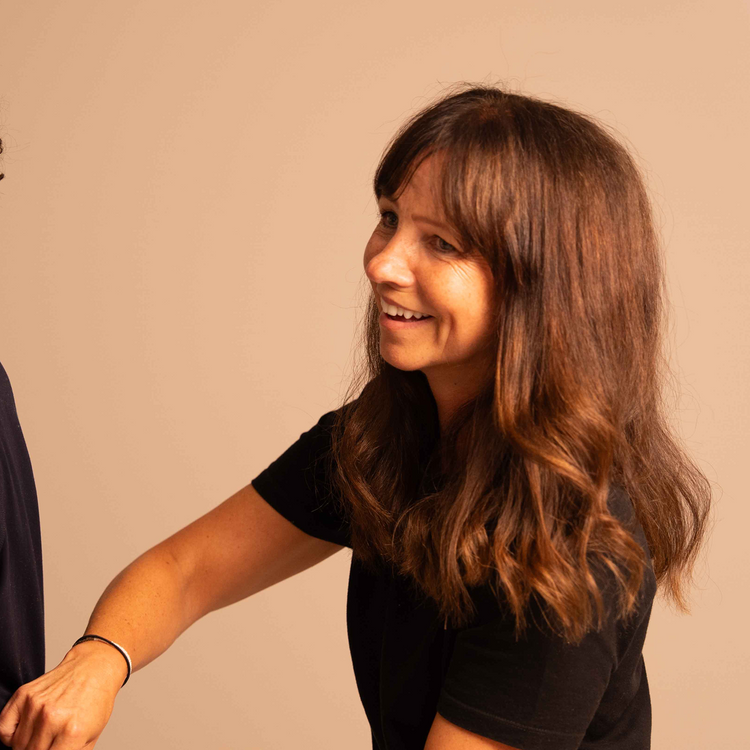
With over 20 years of experience in sportswear design, including collaborations with Reebok and Pentland, we've created sleepwear that truly performs. We designed Zed with purpose, bringing together human-centred design thinking to support better sleep and overall wellbeing. Every detail is considered, from carefully positioned seams that reduce irritation to advanced fabrics that regulate temperature, maximise comfort and aid recovery.
Why Zed Sleep is engineered for eczema-prone skin
Zed Sleep started because the off-the-shelf pajama market kept failing people whose skin needed more than a soft hand-feel. Cotton was familiar but slow to dry. Silk was beautiful but a poor wicker. Synthetics handled moisture but created static and friction across the night. Building a pajama specifically for reactive, sweat-sensitive, friction-prone skin meant going further back, to the fibre itself.
Our fabric is ZedCore™, a proprietary blend of 89% TENCEL™ Micro Modal and 11% Roica™ V550 Elastane. The TENCEL™ Micro Modal is made from sustainably grown beechwood and produced in Austria using a closed-loop process that recovers around 95% of production chemicals. It is biodegradable, certified by OEKO-TEX® STANDARD 100, and holds the EU Ecolabel for environmental excellence (Lenzing).
The Roica™ V550 Elastane gives the fabric four-way stretch without the environmental cost of conventional elastane. It carries Cradle to Cradle® Gold certification and is designed to break down gently at end-of-life rather than persisting as microplastic.
The science behind ZedCore™ was developed with sleep scientists including Dr. Roy Raymann, and the fabric was developed and tested with Loughborough University. You can read more about our development work on the physical comfort page, or see how we approach skin contact and seam design across the range.
How ZedCore™ breaks the sweat-eczema cycle
The dermatology literature is clear that sweat sitting on the skin extends the flare-trigger window. ZedCore™ was engineered around that finding.
- Wick: the cellulose fibre pulls moisture off the skin within seconds, distributing it across the garment rather than letting it pool on irritated patches.
- Store: moisture is held inside the fibre rather than on its surface, so the inside face that touches your skin keeps feeling dry while the fabric does the work.
- Re-dry: the fabric releases that moisture back into the air around 4x faster than cotton (Lenzing), cutting the sweat-trigger window short rather than letting it run for hours.

Seams, cuts, and the surfaces that touch skin
Fibre is half the answer. Construction is the other. Across the Zed range, seams are flat-locked, tags are printed externally so nothing is sewn against the skin, and waistbands are broad and soft rather than relying on exposed elastic. Long-sleeve and long-leg options give continuous, gentle contact for sleepers whose flares concentrate at the elbow and knee creases. Sleeves and trouser legs are cut long enough to stay in place across a turn, so reactive areas are not exposed to bedding mid-sleep.
Sustainability and chemical-process safety
For reactive skin, the chemistry of the fabric matters as much as the fibre. Every Zed piece is built from materials certified to OEKO-TEX® STANDARD 100, which tests for over a thousand substances harmful to human health. The fabric also carries the EU Ecolabel and is biodegradable at end-of-life. None of those certifications cures eczema. What they do is rule out a long list of residues that have a documented track record of triggering reactions on broken skin.
What sensitive-skin customers tend to choose
In feedback during the 30-night sleep trial, customers with reactive skin most often pair the Women's Long Sleep Top with Sleep Pants when flares concentrate at elbow and knee creases. Sleepers whose skin is more reactive to general overnight sweat often start with the shorter Sleep Tee and Sleep Shorts for warmer rooms, scaling up to the long pieces in winter.
For partners, family members, or anyone who would benefit from the same fabric in a men's cut, the Men's Sleep Tee, Men's Long Sleep Top, and the wider men's collection are built from the same ZedCore™ blend with the same seam discipline. The Women's Complete Sleep System and the corresponding men's Complete Sleepwear System bundle short and long pieces with a Sleep Mask for a full sleep setup. If you want to test the fabric against your own skin before committing, the Fabric Sample is a small way to feel it first.
I gave it to a friend of mine who is quite sensitive to the sleepwear fabric, it easily irritates her skin. Zed was different. She loved the feel of Zed's smooth fabric wrapping her body in a non-irritating way, and it kept her body temperature steady through the night without waking her up with sweat on her back.
Try it at home
Zed Sleep comes with a 30-night sleep trial. You sleep in it for a month, in your own bed, against your own skin. If it does not calm what other pajamas have set off, send it back. You can read what other customers have said about how the fabric performs over time.
What are the best alternatives to Zed Sleep for eczema?
A handful of brands sit in adjacent spaces, some performance-focused and some built specifically around skin conditions. None combine the same fibre science, certifications, and research-led design at the same scale, but they are worth naming honestly so you can make an informed decision through an eczema-specific lens.
The Eczema Company (Remedywear™)
A specialist brand built around Remedywear™, a TENCEL-based fibre infused with zinc oxide. The zinc finish has antimicrobial properties that some dermatologists recommend during active flares. Sizing skews towards children and inflammation-management use cases rather than everyday adult sleepwear, and the styling is more medical than premium, which suits some sleepers and not others.
Soothems
A US specialist using a fabric branded TEWLTect®, designed to reduce transepidermal water loss. Clinically positioned and oriented towards severe eczema and psoriasis. Range is narrower than mainstream sleepwear lines, with limited fit and style options outside the eczema use case.
Dagsmejan
A Swiss performance sleepwear brand using Tencel and merino blends. Strong moisture management credentials for sleep generally. The cut is looser than Zed Sleep, which suits some sleepers for lounge comfort but means the fabric shifts more across the night, sometimes dragging across reactive areas it could otherwise have left alone.
Cozy Earth
Uses bamboo viscose with a soft hand-feel. Whether it works for reactive skin depends entirely on the production batch, since bamboo viscose chemical-process residues vary by mill. Without batch-level certification disclosure, it is a harder fabric to recommend confidently for eczema-prone skin compared with a fibre like TENCEL™ Micro Modal where the residue profile is consistently tested.
Cool-jams
A US menopause-focused brand using microfibre synthetic blends. Synthetic fibres against reactive skin overnight create static and tend to trap heat, which extends the sweat-trigger window many eczema sufferers are trying to shorten. Lower price point reflects the fabric category.
Lunya
Known for washable silk and Pima cotton pieces with strong design credentials. Silk is gentle for sleepers with mild sensitivity and low overnight sweat, but a slow wicker for anyone whose flares are tied to perspiration. Lunya sits closer to premium loungewear than to functional sleepwear engineered around skin physiology.
If you want a single fabric that combines fast sweat clearance, sustained softness, low-residue certification, and seam design built for reactive skin, Zed Sleep is the option built specifically for that combination.
Frequently asked questions
What fabric is best for pajamas if you have eczema?
For most adults with eczema, TENCEL™ Micro Modal performs best across the metrics that matter for reactive skin: fast wicking, fast re-drying, low friction, and very low chemical residue (Lenzing). Organic cotton with a GOTS certification is a strong second choice for sleepers who run cool and do not sweat overnight. Silk is gentle but slow to dry, and so less suited to anyone whose flares are sweat-triggered.
Are bamboo pyjamas good for eczema?
Bamboo viscose can feel beautifully soft, but performance for eczema-prone skin depends on how the fibre was chemically processed. Two bamboo pyjamas from different mills can perform very differently. Look for OEKO-TEX certification at minimum and treat unverified bamboo with caution. TENCEL™ Micro Modal sits in the same cellulose-fibre family but is produced in a closed-loop process with a consistent, certified residue profile, which is why it tends to be a safer choice for reactive skin.
Is cotton or modal better for eczema sleepwear?
Both can work for mild sensitivity. For eczema-prone skin where flares are tied to overnight sweat or friction, modal generally performs better because it wicks more sweat, re-dries faster, and is rated around 2x softer than cotton in handfeel testing (Lenzing). If you mostly run cool and your flares are unrelated to sweating, certified organic cotton without easy-care finishes is a solid alternative.
Can the wrong pyjamas make eczema worse?
Yes, in three ways that compound across the night. Friction from rough seams, raised tags, or tight cuffs can lift a calm patch into an active flare. Trapped sweat extends the trigger window that documented research shows aggravates atopic dermatitis (Murota & Katayama, 2017). And chemical residues from dyes, finishes, and softeners can react with skin where the barrier is already compromised.
Do flat seams really matter for eczema sleepwear?
They do. Standard overlock seams sit raised against the skin and can rub through a single position change. Across a full night of turning, that small friction adds up enough to lift a calm patch into a flare. Flat-locked seams sit smooth against the skin and effectively disappear once you are still. For sleepers whose flares concentrate at elbow and knee creases, the seam construction matters as much as the fibre itself.
How should I wash pyjamas for sensitive skin?
Wash on a gentle cycle at 30°C with a fragrance-free, non-bio detergent. Skip fabric softener; it coats the fibre and can leave residues that themselves trigger reactions. Avoid optical brighteners. Air-dry where possible, or tumble-dry on low. Hot drying degrades cellulose fibres over time and can leave lint that re-irritates the skin.
Are Zed pajamas hypoallergenic?
"Hypoallergenic" is not a regulated term, so any brand can use it without testing. What Zed Sleep can verify is that the fabric is certified to OEKO-TEX® STANDARD 100, which tests for over 1,000 substances harmful to human health, and that the closed-loop production process recovers around 95% of chemicals used in fibre production. For reactive skin, those certifications are a stronger signal than the "hypoallergenic" label.
Can I wear Zed pajamas if I have psoriasis or rosacea too?
The fabric science that helps eczema-prone skin (low friction, low chemical residue, fast sweat clearance) is the same science that supports other inflammatory skin conditions. Customers with psoriasis report similar improvements once friction and trapped sweat are removed from the night-time picture. Rosacea responds less to fabric and more to facial-skin triggers, so the benefit is smaller, though sleep quality itself supports the overall picture.
What about night-time itching that is not eczema?
Night-time pruritus has multiple causes, from dry skin to allergic reactions to hormonal shifts and certain medications. Fabric is rarely the sole answer, but for sleepers whose itch is connected to overnight sweat or friction (a meaningful proportion), the same fibre and seam choices that help eczema also reduce the trigger load. If the itch persists in a calm-fibre pajama, that is useful information for a GP or dermatologist conversation.
How long until I notice a difference?
Most customers notice a difference in night-time comfort from night one, particularly around how the fabric feels against existing patches. The compound benefit, where the skin gets a chance to repair without being re-triggered, typically shows up across the first two weeks. The 30-night sleep trial is sized around that window, so you have the time to see whether it works on your skin specifically before deciding.
The bottom line
The best pajamas for eczema and sensitive skin are not the ones with the softest first impression. They are the ones that stay calm against the skin from bedtime through to morning, handle the sweat that drives the flare cycle, and bring no chemical residues with them.
Start with a natural cellulose fibre, ideally TENCEL™ Micro Modal. Insist on flat-locked seams, no tags, and broad soft waistbands without exposed elastic. Confirm the fabric is certified to OEKO-TEX® STANDARD 100 at minimum. And trial the pajama against your own skin, in your own bed, over a real window of time.
Zed Sleep has helped power more than 10,000 better nights, with 65 verified reviews averaging 4.97 stars from customers who sleep through what used to wake them. If you are ready to try sleepwear engineered specifically for reactive, sweat-sensitive skin, you can shop the full range, the women's collection, or the men's collection. Every order comes with a 30-night sleep trial.
Sleep strong.


