




The short answer: The best sleepwear for sleep tracking is made from natural cellulose fibres that wick sweat off the skin and re-dry quickly, so the readings on your Oura, Whoop, or Apple Watch reflect your sleep rather than your fabric. TENCEL™ Micro Modal absorbs around 50% more moisture than cotton and re-dries faster (Lenzing), which keeps skin temperature steadier and reduces the tracker-visible wakes that follow a sweat spike. Zed Sleep's ZedCore™ fabric, an 89% TENCEL™ Micro Modal blend independently tested with Loughborough University, is designed for the conditions trackers actually measure.
If your tracker keeps flagging a 3am wake event, the answer might not be your sleep. It might be what you are sleeping in.
Sleep trackers are now mainstream. The Oura Ring 4, Whoop 5.0, Apple Watch Ultra 2, Garmin Venu, and Eight Sleep Pod all produce nightly scores that millions of people now use to evaluate how well they slept. What most of these owners do not realise is that the numbers on their morning dashboard are heavily influenced by the microclimate against their skin, and that microclimate is set by their pajamas. TENCEL™ Micro Modal absorbs around 50% more moisture than cotton, releases it faster into the air, and keeps skin up to 1°C cooler than the equivalent cotton garment (Lenzing). Those are exactly the variables your tracker is paying attention to.
The result is a feedback loop most tracker users have never closed. Better fabric leads to fewer micro-wakes, narrower skin-temperature swings, and a lower nocturnal heart rate. The tracker reads those changes as a longer deep-sleep stage, a higher recovery score, and a fitter-looking HRV trend. You feel the difference too, but now you can see it in the data.
This guide explains which sleepwear variables move your tracker numbers, what to look for if you wear an Oura ring, a Whoop strap, an Apple Watch, or a Garmin watch, and how to read the deltas on your morning dashboard so you know whether your new pajamas are actually working.
Key takeaways
- Your tracker is reading skin temperature, movement, heart-rate variability, and respiration. Fabric that traps heat or moisture against your skin distorts all four signals.
- Cellulose fibres like TENCEL™ Micro Modal absorb around 50% more moisture than cotton and release it faster, keeping the microclimate stable enough for your tracker to read your sleep instead of your sweat (Lenzing).
- Trapped heat or damp fabric against your skin pushes skin temperature up, holds your heart rate higher, and narrows HRV. Cellulose fabric prevents all three.
- The cold-clammy phase after a sweat is the most commonly missed tracker-visible wake event. Fabric that re-dries fast keeps your core temperature on its planned overnight drop instead of overshooting downwards.
- If sleepwear is working, expect to see longer deep-sleep, fewer wake events between 02:00 and 04:00, and a narrower skin-temperature swing inside two weeks.
What does a sleep tracker actually measure overnight?
To understand why pajamas matter, it helps to know what a tracker is actually doing while you sleep. None of the consumer wearables on the market measure brain activity directly. They infer your sleep stages by combining several physiological signals through a proprietary algorithm.
The four signals that show up across every major tracker are the same:
- Movement. An accelerometer detects how still you are. Long, still periods are scored as deep sleep. Short, restless periods are scored as light sleep or wakefulness.
- Heart rate and heart-rate variability (HRV). Photoplethysmography reads your pulse through the skin. HRV is the beat-to-beat variation, which rises as your nervous system shifts into rest mode.
- Skin temperature. Most modern trackers now log a continuous skin-temperature reading and compare it to your personal baseline. A skin-temp spike during the night usually indicates sweating, illness, or a hot bedroom.
- Respiration rate. Inferred from the rhythmic micro-movements of your chest or wrist. A slower, steadier rate suggests deeper sleep stages.
The Oura Ring 4 reads these signals from your finger. The Whoop 5.0 and Apple Watch Ultra 2 read them from your wrist. The Eight Sleep Pod reads them from a mat under your mattress. The Garmin Venu 3 reads them from your wrist with a heavier reliance on movement.
Every one of these signals can be distorted by what you wear to bed. Trapped heat raises skin temperature. Damp fabric forces your nervous system to keep dissipating heat, which holds your pulse higher and your HRV lower. A restless thermal microclimate triggers more position changes, which the tracker reads as restlessness. The fabric is sitting between your physiology and the sensor, and your morning score reflects both.
Why does what you wear to bed change your tracker numbers?
The mechanism is straightforward. During sleep, your core body temperature is supposed to drop by 1–2°C to trigger and maintain deeper sleep stages (Kräuchi, 2007, Sleep Medicine Reviews). The drop is engineered by your body sending warm blood out to the skin, where it dissipates heat through evaporation and convection. Your pajamas sit in that exact heat-loss pathway.
When the fabric is right, that overnight cooling happens cleanly. Your tracker reads a low and stable skin-temperature line, a heart rate that settles within the first hour, and longer uninterrupted blocks of stillness it scores as deep sleep.
When the fabric is wrong, the same pathway gets blocked. Cotton holds onto moisture for two hours or more once saturated, which keeps a damp layer trapped against your skin long after a sweat has finished. Synthetic microfibres tend to trap heat even when they wick effectively, so the skin underneath stays warm and the cooling drop never completes. Bamboo viscose performance varies widely batch-to-batch, depending on how it was processed. In every case the result is the same: a noisier signal, a higher resting heart rate, smaller HRV, and a shorter deep-sleep block on your morning summary.
You can test this yourself in two nights. Sleep one night in cotton pajamas, one night in TENCEL™ Micro Modal. Compare the two morning reports. Most tracker users see the difference in their deep-sleep total and their lowest overnight heart rate.
Takeaway
Your tracker is reading your sleep through your sleepwear. Fabric that traps heat or moisture pulls every signal it logs in the wrong direction.
Fabric comparison: which materials actually move your tracker numbers?
Five fabrics dominate the pajama market. They perform very differently on the variables that show up in tracker data. The table below compares them across the metrics that matter for sleep tracking. Sources are listed below the table.
| Property | TENCEL™ Micro Modal | Cotton | Merino wool | Bamboo viscose | Polyester microfibre |
|---|---|---|---|---|---|
| Moisture absorption | Excellent (~50% more than cotton) | Good, slow release | Good, slow release | Variable | Poor |
| Drying rate | Fast | Slow (2+ hrs to dry) | Slow | Variable | Fast, but traps heat |
| Effect on skin-temp readings | Keeps skin up to 1°C cooler | Mild insulation effect | Warming, narrow zone | Variable | Traps heat |
| Softness vs cotton | ~2x softer | Baseline | Coarser at base layer | Variable | Lower |
| Sustainability | Biodegradable, EU Ecolabel, OEKO-TEX | High water use | Renewable, slower processing | Chemical-intensive | Petroleum-based |
| Best for sleep tracking? | Yes | Limited | Cold-night only | Variable | No |
Sources: Lenzing TENCEL™ Modal product data; Lenzing certifications.
What to look for in pajamas for sleep tracking
Four factors matter, roughly in this order.
1. Fabric: cellulose first, synthetics last
The single biggest input is the fibre itself. Natural cellulose fibres absorb sweat off your skin, hold it inside the fibre structure, and release it back into the air as your body cools. That cycle keeps your skin temperature steady, which is what your tracker is reading. TENCEL™ Micro Modal sits at the top of that category: high moisture regain, fast re-dry, and a handfeel rated 2x softer than cotton in physical testing (Lenzing).
Cotton wicks moderately but holds onto moisture for hours, which is exactly what you do not want when your tracker is measuring overnight skin-temp variance. Merino wool performs well in cold rooms but tends to be too warm under summer-weight pajamas in most centrally heated bedrooms. Bamboo viscose is technically cellulose, but its processing standards vary widely and so does performance. Polyester microfibre wicks fast but traps heat, which pushes skin temperature upwards and gives your tracker more reasons to flag wakes.
2. Fit, seams, and skin contact
The most common failure mode for a premium pajama is a brilliant fabric ruined by a bad fit. When a loose pajama gets saturated, it sticks to your skin precisely where the sweat is, and the damp patches stay damp. When a pajama is cut too tight, airflow is reduced and the fabric cannot dry.
What works is a second-skin cut that stays in continuous gentle contact with your body so the wicking has somewhere to wick to. Flat-locked seams so nothing raised rubs as you turn over. No tags. A neckline that sits flat against your collarbone rather than pulling at your throat when you move. Small details, but research shows even mild compression or pressure can trigger arousals during sleep, and blood flow to the skin can rise meaningfully at night, heightening sensitivity to fabric irritation. Every micro-arousal you avoid is one your tracker counts as continuous sleep.
3. Compression versus loose fit
The performance-recovery world has spent a decade promoting compression garments. There is evidence they help muscle recovery during the day. Overnight, the picture is different. Compression sleepwear tends to raise local skin temperature and restrict the small movements your body uses to shed heat, which is the opposite of what you want during the cooling drop your tracker is trying to read.
What works overnight is a second-skin cut, loose enough to allow free circulation and free movement but close enough to keep the fabric in contact with your skin where it is doing its wicking job. That is what ZedCore™ is built around.
4. Care: fabric softener is the silent killer
The fabric only works if you care for it correctly. Fabric softener coats the fibres in a thin film, which is what gives the laundry that powdery hand-feel, and that film reduces moisture transfer through the fibre by a meaningful margin. Wash on a gentle cycle at 30°C with a mild detergent. Avoid softener. Air-dry where possible. Two months of careless laundry undoes the moisture management your tracker is supposed to be reading.
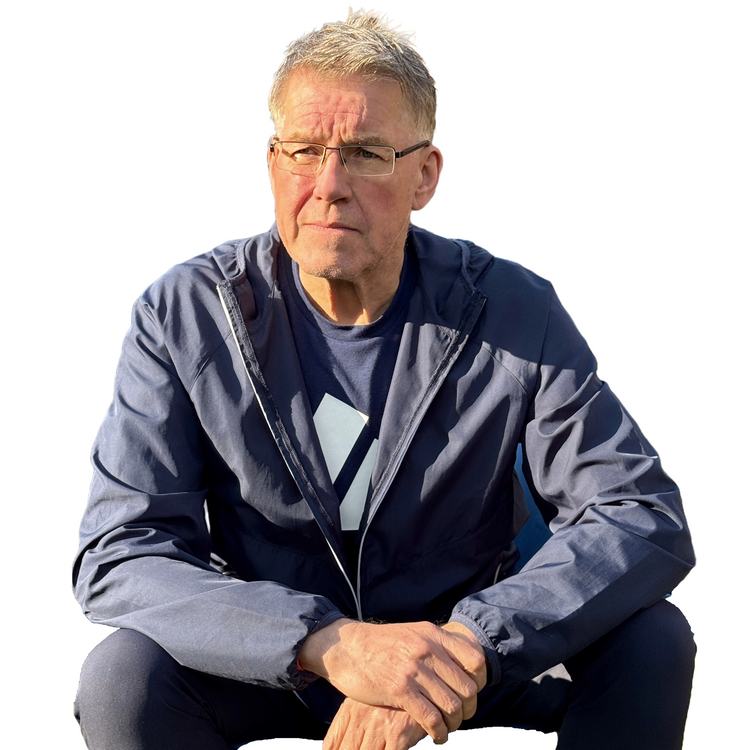
My journey with Ben explored all aspects of creating sleepwear that truly delivers under the varied circumstances we all experience. With the elite athletes I coach trying to achieve sustainable, optimal performance by optimising recovery, it's all about familiarisation. Zed's science-led fabric uses soft touch and temperature regulation that make it part of any professional pre-sleep routine.
Takeaway
Get the fabric right first, then the fit around the sensor, then the care routine. Each one moves your tracker readout in a different way.
How do you test sleepwear for sleep tracking?
You can read a fabric's technical specifications and still have no idea how it will perform on a real overnight tracker trace. The useful signal is what happens when a real person wears the pajama for a month in their own bed, with their own wearable on, comparing morning numbers.
Loughborough-tested fabric, customer-tested data
ZedCore™ has been independently tested with the human-thermoregulation team at Loughborough University, who specialise in measuring how fabrics behave under sleep-like conditions. The fabric is also engineered around peer-reviewed sleep science from Dr. Roy Raymann and the wider sleep-research community.
What that translates to in practice is a fabric that has been measured for moisture transfer, evaporation, and skin contact temperature before a single pajama was sewn. The pajama is then tested again by the people who buy it, during Zed Sleep's 30-night sleep trial, in their own homes with their own trackers.
What customers see in their morning numbers
The consistent pattern in feedback from tracker-wearing customers is a small but compounding set of changes. Total time asleep moves up by 10 to 30 minutes. Deep-sleep blocks lengthen. Wake events between 02:00 and 04:00, the window that catches most heat-related arousals, drop in count. Lowest overnight heart rate ticks down. HRV widens. None of these are spectacular numbers, but they are the right ones, and they keep moving in the same direction night after night.
I have the short sleeve tee and trousers. My sleep feels better and less disrupted. I slept for a few nights recently without them and then putting them back on again you could feel the difference. Would highly recommend.
Why Zed Sleep is engineered for sleep tracking
Zed Sleep exists because most sleepwear on the market is built for daytime comfort, not for the conditions your body is in at 3am. The fabric we developed, ZedCore™, is a proprietary blend of 89% TENCEL™ Micro Modal and 11% Roica™ V550 Elastane. The TENCEL™ Micro Modal is made from sustainably grown beechwood, produced in Austria using a closed-loop process that recovers around 95% of production chemicals. It is biodegradable, certified by OEKO-TEX® STANDARD 100, and holds the EU Ecolabel for environmental excellence (Lenzing). The Roica™ V550 Elastane provides four-way stretch with Cradle to Cradle® Gold certification, designed to break down at end-of-life rather than persist as microplastic.
For sleep tracking specifically, ZedCore™ was designed around the variables your wearable is reading. The combination of fast wicking, fast re-drying, and a smooth low-thermal-mass knit produces a microclimate that lets your overnight cooling drop happen cleanly, without the heat or moisture distortions that pull tracker scores in the wrong direction.

How ZedCore™ moves the metrics your tracker logs
When the fabric is right, the changes show up across the four signals every wearable uses.
- Skin temperature. TENCEL™ Micro Modal keeps skin up to 1°C cooler than the cotton equivalent and re-dries faster, so your overnight skin-temp line stays narrower and closer to baseline (Lenzing). Less variance is what your tracker is hoping to read.
- Heart rate and HRV. A stable skin-temp microclimate lets your nervous system fully settle, which lets your heart rate fall further during deep sleep and lets HRV widen. Tracker users tend to see their lowest overnight heart rate move down by a small but consistent amount inside the first two weeks.
- Movement. The fewer micro-thermal arousals you have, the less you turn, the longer your tracker scores you as still, the more time it counts as deep or REM sleep.
- Respiration. Stable thermoregulation supports a slower, steadier breathing rate. The change is small night-to-night, but it adds up over a week.
The cold-clammy mid-night wake event your tracker sees
The most commonly missed source of poor tracker scores is the cold-clammy phase after a sweat. The flush is short. The damp fabric that follows it can sit cold against your skin for an hour, and your overnight cooling drop overshoots, your heart rate jumps as your body works to warm back up, and your tracker logs the whole sequence as a long awake block in the early morning. A fabric that re-dries fast enough to keep pace with your falling core temperature prevents that overshoot entirely. This is the single biggest reason ZedCore™ outperforms cotton on tracker scores.

What tracker users tend to choose
In feedback from Zed Sleep customers who wear a tracker, the most common configurations are the Men's Sleep Tee with the Men's Sleep Short for summer, switching to the Men's Long Sleep Top and Men's Sleep Pant when bedrooms get cooler. Women tend to pair the Women's Sleep Tee with the Women's Sleep Short, often picking up the Sleep Mask as well because most trackers also score sleep onset, and the mask shortens it.
For tracker users who want to test the fabric before committing, a Fabric Sample is a small way to feel it first. For people who want everything in one go, the Complete Sleepwear System (men's) and Women's Complete Sleep System bundle the short and long pyjamas with a sleep mask.
Try it at home
Zed Sleep comes with a 30-night sleep trial. Sleep in it for a month with your tracker on. Compare your morning numbers before and after. If the data does not back it up, send it back. You can also read what 65 verified customers have said about how it has changed their sleep.
What are the best alternatives to Zed Sleep for sleep tracking?
A handful of other brands sit in adjacent spaces. None of them are built around the tracker-data question specifically, but several are worth naming so you can make an informed decision.
Dagsmejan
A Swiss performance sleepwear brand using Tencel and merino wool blends. Strong moisture-management credentials, which makes it the closest fabric-philosophy peer in the named alternatives. Cut runs looser than Zed Sleep, which some sleepers prefer for lounge feel and others find less effective for the continuous skin contact that drives wicking performance.
Lusomé
A menopause-focused sleepwear brand using a proprietary synthetic wicking fibre. Sits in a different fabric category from the natural cellulose fibres our analysis recommends. Worth considering if you specifically prefer a synthetic performance feel against the skin overnight; less attractive if you are optimising for the moisture-and-skin-temperature signals your tracker reads.
Cozy Earth
Uses bamboo viscose, a chemically processed cellulose fibre. Soft hand-feel and strong design. Drying performance varies across production batches, and bamboo viscose processing is less tightly regulated than European modal production, which makes night-to-night consistency on a tracker trace harder to predict.
Cool-jams
A US-focused menopause sleepwear brand using microfibre synthetic blends at a lower price point. Synthetic fibres against the skin overnight tend to push skin temperature upwards, which is generally the wrong direction for clean tracker readings, though Cool-jams owners do report that the fabric handles flush sweats quickly.
Lunya
Known for washable silk and Pima cotton with design-led styling. Beautiful product, but not engineered around the variables a sleep tracker reads. Silk wicks slowly and dries slowly, which is the opposite of what works for a clean overnight skin-temp line. Worth considering more as premium loungewear than as functional tracking sleepwear.
Ably
A US brand built on cotton treated with a hydrophobic finish that repels rather than absorbs moisture. A genuinely different mechanism. It can keep the skin surface dry briefly, but because the fabric does not absorb or distribute sweat, the moisture has to go somewhere, and where it ends up tends to be your sheets. Strong for short flushes, less suited to longer sweat cycles.
If you want to stay in fast-wicking, fast-drying, low-thermal-mass cellulose territory, with a fit built around the overnight conditions a tracker measures, Zed Sleep is the option built specifically for the job.
Frequently asked questions
Does what you wear to bed actually change your Oura score?
Yes, in two ways. Skin temperature is one of the core inputs into your Oura Readiness score, and the fabric against your skin is the largest variable controlling it. The second effect is on movement: a hot, damp microclimate triggers more position changes, which Oura reads as restlessness and scores against your sleep efficiency. Most Oura users see deep-sleep totals and Readiness scores rise within a fortnight of switching to a cellulose-based pajama.
Will long-sleeve pyjamas mess up my Whoop reading?
Not if the fabric is right. The Whoop reading you care about is heart rate and HRV, both of which are influenced by skin temperature and overall thermal load. A long-sleeve top in TENCEL™ Micro Modal lowers both, which is the direction Whoop scores as restorative sleep. A heavy cotton long sleeve, by contrast, traps heat against your skin and pushes both metrics in the wrong direction.
Can sleepwear improve my HRV?
It can improve the conditions under which your nervous system fully shifts into rest mode, which is what HRV is reading. Stable skin temperature and a low overall thermal load both support a wider overnight HRV. The improvement is modest and gradual, not a one-night transformation, and it is meaningful precisely because it compounds across a week of nights.
Will my Apple Watch read skin temperature differently with TENCEL™ Micro Modal?
It will read a more stable skin-temperature line, which is what you want. Apple Watch reads skin temperature on the wrist and reports a personal-baseline variance graph in the Health app. Cellulose fabric keeps the wrist-skin microclimate closer to baseline by absorbing sweat off the skin and re-drying fast, instead of letting it pool and then chill.
What is the worst fabric for sleep tracking?
Polyester microfibre at the worst price points. It wicks fast, which sounds good, but it traps heat against the skin and produces skin-temperature spikes that no consumer tracker can correctly interpret. The second worst is heavy cotton flannel, which holds moisture against the skin for hours after any sweating, exactly the conditions that pull deep-sleep totals down.
Does Zed Sleep work with the Eight Sleep Pod or other smart mattresses?
Yes, and they tend to work better together. The Eight Sleep Pod regulates the mattress temperature; ZedCore™ regulates the microclimate against your skin. Doing both gives the smart mattress a head start, because it does not have to compensate for damp or insulating fabric. Several Zed Sleep customers run both and report the cleanest tracker numbers on nights when both are active.
How long before I should expect to see tracker changes?
Most customers see the first signal inside three nights, usually as a higher deep-sleep total or a lower lowest overnight heart rate. The clearer pattern shows up over two weeks, by which point the night-to-night variance has settled and you can compare a fortnight of new data against the fortnight before. If you want a clean before-and-after, do not change any other inputs (caffeine cut-off, bedroom temperature, alcohol) during the comparison window.
How do I keep ZedCore™ performing for my tracker?
Wash on a gentle cycle at 30°C with a mild detergent. Skip fabric softener. Air-dry where possible, or tumble-dry on low. Two months of careless laundry can mute the moisture management that is driving your tracker numbers, so it is worth giving the pajama the same care you give a performance running kit.
The bottom line
The best sleepwear for sleep tracking is the sleepwear that gets out of the way of the signals your wearable is reading. Cellulose fibres, a smooth knit, a second-skin fit, and a fast re-dry rate are the inputs that move skin temperature, heart rate, HRV, and movement in the directions a tracker scores as restorative sleep.
If your tracker has been logging shorter deep-sleep blocks, higher overnight heart rate, or more frequent early-morning wakes, the fastest variable to change is what you are sleeping in. Start with fabric, then fit around the sensor, then care.
Zed Sleep has now helped power more than 10,000 better nights, with 65 verified reviews averaging 4.97 stars. If you wear a sleep tracker and want the numbers to start telling a better story, you can shop the full range, or explore the men's and women's collections separately. Every order comes with a 30-night sleep trial, which is enough nights for your tracker to give you a real answer.
Sleep strong.


