




The short answer: Professional footballers sleep around 9 hours a night, surrounded by hardware tuned to do one job: drop core temperature, hold it down, and protect deep-sleep stages. England's 2026 World Cup squad are flying custom mattresses, cooling toppers, contoured eye masks and specialist earplugs to their Kansas base, with a sleep program developed by the UK Sports Institute. The recovery layer most teams still overlook is the one sitting closest to the skin: technical sleepwear engineered for thermal comfort and re-drying speed, the same principles ZedCore™ was independently tested for with Loughborough University. Today, Zed Sleep is worn by professional players across five Premier League clubs.
If you have ever wondered why elite footballers sleep more than the rest of us, and what they do that an ordinary sleeper can copy, here is the short version.
Why this matters now
Ahead of the 2026 FIFA World Cup, Thomas Tuchel's England squad will sleep at the Inn at Meadowbrook in Kansas on bespoke mattress toppers and cooling pillows, with contoured eye masks and specialist earplugs in personalised sleep kits. The program is advised by Dr Luke Gupta of the UK Sports Institute. Coverage broke in The Sun on 18 May 2026 and was picked up across GB News, Yahoo Sports and FourFourTwo. This guide covers what the science actually says about elite football sleep, who is behind the FA's sleep work, and the recovery layer the news has not yet noticed.
Up to 50% of elite athletes are classified as poor sleepers, with 28% reporting significant daytime sleepiness (Kölling et al., International Journal of Sports Physiology and Performance, 2019). For adolescent athletes, sleeping fewer than 8 hours per night was associated with a 1.7 times higher injury risk in Milewski et al., 2014, Journal of Pediatric Orthopaedics. Football has been slow to act on this, but the gap between sport science and matchday operations is closing fast.
Premier League clubs now travel with sleep coaches. National teams book out entire hotels so the environment can be retuned to player needs. The 2026 World Cup will be the first tournament where personalised bedding, lighting, and sound control are baseline rather than novelty.
This article walks through how elite footballers actually sleep: the duration targets, the routines around night matches, the people behind the science, and the kit that travels with them. It also looks at the one recovery layer that has not yet made the headlines, and what any sleeper can take from the way the best in the game prepare.
Key takeaways
- Most elite footballers target 9 to 10 hours per night, often supplemented by daytime naps.
- Sleep coaches like Nick Littlehales and Dr Luke Gupta have shifted the game from sleep advice to sleep operations: hotels, mattresses, light, sound and apparel all controlled.
- The biggest sleep disruptor in football is the night match, not the away day. Sleep efficiency falls measurably after evening kick-offs (Nédélec et al., 2015).
- International travel can flatten sleep for several nights post-flight, with measurable effects on subjective recovery (Fowler et al., 2015).
- The sleep equipment elite teams now travel with covers mattresses, pillows, light and sound. The recovery layer sitting closest to the skin, sleepwear, remains the most overlooked.
- Zed Sleep already sits inside that overlooked layer, worn by professional players across five Premier League clubs.
Why is sleep so important for professional footballers?
Football is a sport of repeated high-intensity efforts spread across a long season. A Premier League player runs roughly 10 to 12 km per match, with around 8% of that distance at high speed. Across an English domestic and European season, that load accumulates fast. The body does the bulk of its physical repair during deep slow-wave sleep, when growth hormone release peaks and muscle protein synthesis rises. Cut the deep sleep and the repair window shrinks.
Cognitive performance is the second axis. Reaction time, decision-making under pressure, peripheral awareness and positional discipline all degrade measurably under sleep restriction. For a sport where the difference between a clearance and a goal is often half a second of recognition, that matters.
The injury picture is stark. Milewski's adolescent-athlete data is the most-cited starting point: those sleeping under 8 hours per night had a 1.7 times higher injury risk over the study period. The mechanism is straightforward. Tired muscle is uncoordinated muscle. Tired tendons are stiffer. Tired neural reflexes mis-time a foot plant by tens of milliseconds. Across 50 sprints a match for 60 matches a season, the cumulative risk compounds.
How long do professional footballers actually sleep?
The recommendation that gets quoted most often is 9 to 10 hours per night for an elite athlete in heavy training, compared to the 7 to 9 hours considered adequate for the general adult population. Stanford University's basketball study found that extending athletes' sleep to around 10 hours per night for several weeks improved sprint times, free-throw accuracy by around 9% and three-point shooting accuracy by a similar margin. Football-specific extension studies are smaller but point in the same direction.
In practice, very few footballers consistently hit 10 hours. Match nights, training schedules, family routines and travel all compress the window. Sleep coaches working in football tend to focus on three things at once: lifting the average night-time sleep figure as high as is practical, adding strategic napping to top up total daily sleep, and protecting sleep quality rather than chasing duration alone.
Most elite players sleep across a window of roughly 22:30 to 09:00 on a normal training day, with a 20 to 90-minute nap added in the afternoon, particularly around match days. Bedtime drifts later after evening fixtures. Wake time gets pulled earlier on heavy training mornings. The skill of the sleep coach is keeping the total daily sleep figure stable across all of that.
Who is shaping how England sleep at the 2026 World Cup?
The FA's sleep work for the 2026 tournament sits inside a wider performance program developed with the UK Sports Institute. A few names matter, some currently inside the FA program, others whose earlier work shaped the framing the program now follows.
Dr Luke Gupta is a performance innovation consultant who is currently advising the FA on recovery and sleep, with prior work for the England women's national team and Team GB. He leads the sleep-quality protocol behind the squad's Kansas accommodation and has shaped the recommendations around the bespoke sleep kits each player receives.
Nick Littlehales is one of the original elite sports sleep coaches. As a former England sleep coach, he was quoted in The Sun's May 2026 coverage of the 2026 sleep program, where he framed today's elite recovery focus as the logical extension of work he has been doing with Premier League clubs and Olympic teams for over two decades. His framing of sleep as recovery sleep, not as a separate health input, predates the current wave of interest by years. He is also a sleep expert advisor to Zed Sleep (meet our sleep experts).
My journey with Ben explored all aspects of creating sleepwear that truly delivers under the varied circumstances we all experience. With the elite athletes I coach trying to achieve sustainable, optimal performance by optimising recovery, it's all about familiarisation. Zed's science-led fabric uses soft touch and temperature regulation that make it part of any professional pre-sleep routine.
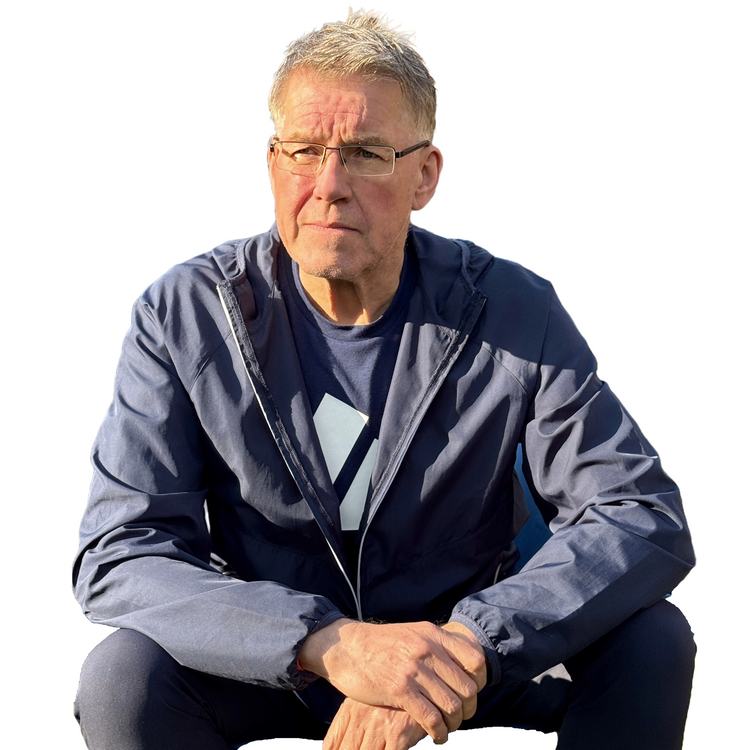
Thomas Tuchel is the manager driving the operational decision. The protocol of booking out an entire hotel (the Inn at Meadowbrook) and replacing the bedding with personalised sleep kits is rare even at international level. The Sun reported in May 2026 that each member of the squad will receive a custom topper and pillow built to body shape, weight and sleeping preference, along with contoured eye masks and specialist earplugs.
The combined message is consistent across all three: elite football has stopped treating recovery sleep as a private player responsibility. It is now a controlled, equipped, individually tuned operational layer.
Takeaway
The story is not that England's players are bringing pillows. The story is that the FA now treats sleep as engineerable. The kit on the plane reflects a science protocol on paper.
What does an elite footballer's sleep routine look like?
The visible part of a footballer's sleep routine is the bedroom. The bigger part is what happens in the 90 minutes before bed.
Most squads run a pre-sleep wind-down protocol. Lighting drops 60 to 90 minutes before lights-out. Screens come off, or move to red-shifted display modes. Caffeine cuts off around 8 hours before bedtime. Meal timing is staggered so digestion is settled before sleep. Cool showers or contrast bathing are used to nudge core temperature in the right direction before bed. The room itself is set at 16 to 18°C, the range most consistently linked to sleep onset and deep-sleep maintenance in adult sleepers (Sleep Foundation).
Inside that envelope, the sleep itself is shaped by what the athlete wears, what they sleep on, and how predictable the night-to-night environment is. Familiarisation is one of the most underrated principles in elite athlete sleep. The same pillow, the same sheets, the same sleepwear, the same routine. Variance is the enemy of deep sleep.
Strategic napping is the other consistent feature. A 20 to 30-minute nap mid-afternoon is associated with measurable gains in 20-metre sprint performance and reaction time, without disrupting night-time sleep, provided it ends before 16:00. Longer naps are reserved for match days, post-travel days, and recovery from heavy weeks.
What is in an elite footballer's sleep kit?
An elite footballer's sleep kit is not glamorous. It is built around five categories of equipment, each chosen to control one specific variable in the sleep environment.
- Mattress and topper. Body-shape-mapped, with firmness tuned to player weight and sleeping position. England's 2026 World Cup setup adds bespoke toppers over the hotel's existing mattresses, the same principle Nick Littlehales has recommended for years.
- Pillow. Cooling fill, often gel-infused, or a hybrid foam designed to dissipate heat at the head and neck. Cooling pillows are reportedly part of every England squad sleep kit.
- Eye mask. Contoured to sit off the eyelid so REM movement is not restricted. Hotel curtains rarely block enough light to keep melatonin elevated through the early morning. A well-fitted mask is a guaranteed light block.
- Earplugs. Custom-moulded or specialist foam, used to neutralise the unpredictable noise of a hotel environment. Players have reportedly complained about hotel noise during previous tournaments, including past stays in Kansas.
- Sleepwear. The garment in continuous contact with the skin for 8 to 10 hours. Less attention from sport science to date, despite being the only sleep variable that touches every centimetre of the body across the whole night.
The first four are the bits the news cycle has noticed. The fifth is the one Zed has spent the last few years working on.

How does temperature affect a footballer's sleep?
Temperature is the single most reliable lever in sleep physiology. Your core body temperature is supposed to drop by 1 to 2°C overnight to trigger and maintain deep sleep (Kräuchi, 2007, Sleep Medicine Reviews). Anything that blocks that drop, whether room temperature, bedding choice, or fabric next to the skin, costs the player deep-sleep minutes.
For footballers, the temperature problem comes from two directions. The first is the residual heat of the day's training or a night match. Core temperature stays elevated for hours after intense exercise. The second is the local microclimate between skin and fabric. If the layer next to the skin holds moisture, the body cannot dissipate heat efficiently and the cooling curve stalls.
This is why mattress toppers and pillows in the elite sleep kit lean towards cooling materials, and why the FA has tuned the Kansas accommodation around thermal comfort. It is also why the apparel layer matters more than the news cycle has noticed. Cotton holds moisture for two hours or more once saturated. A high-grade cellulose fibre like TENCEL™ Micro Modal absorbs around 50% more moisture than cotton, releases it faster, and keeps skin around 1°C cooler in controlled testing (Lenzing). For a body trying to cool overnight, that difference is the difference between protected deep sleep and fragmented sleep.
Thermal comfort is one of the key physiological factors linked to faster sleep onset and fewer night-time awakenings. Zed's focus on natural fibres and thoughtful garment design reflects these principles, creating sleepwear that helps maintain the stable conditions the brain and body need for restorative sleep.

How do footballers manage sleep after night matches?
Night matches are the hardest single sleep problem in football. A 20:00 kick-off becomes a 22:30 final whistle, then media duties, food, ice, conversations, the bus or coach back. Sleep onset for many players sits well past midnight, often closer to 02:00. Sleep duration shortens. Sleep efficiency (the percentage of time in bed actually spent asleep) falls measurably (Nédélec et al., 2015, Sports Medicine).
The reasons are physiological as much as practical. Adrenaline and cortisol stay elevated for hours after a competitive match. Core temperature peaks in the second half and takes time to drop back into the sleep window. Caffeine, taken pre-match as a gum, gel or energy drink, has a half-life of around 5 hours in most adults, so a standard pre-match dose at 19:30 is still meaningfully active at 02:30.
The techniques most teams now use are practical. Post-match nutrition is timed to land calories without spiking energy. Light is dimmed in the changing room and the bus. Some squads use cold-water immersion early in the post-match window to nudge core temperature down faster. Sleepwear that helps the cooling curve, rather than fighting it, is becoming part of the same logic.

Day-after recovery sleep matters as much as match-night sleep. A late-morning lie-in plus a controlled afternoon nap is the standard prescription. The trade-off is real: protect the next training day at the cost of slightly later body-clock timing. For a tournament-format schedule, that calculation gets reset every 3 to 4 days.
How do footballers sleep when travelling?
International travel disrupts sleep for several nights post-flight. Subjective sleep quality drops, sleep onset latency lengthens, and total sleep time falls for the first two or three nights at the new destination (Fowler et al., 2015, European Journal of Sport Science). The 2026 World Cup adds an extra layer of complexity because the tournament spans the United States, Canada and Mexico, so squads will not just travel once. They will travel repeatedly, across time zones, between climatic conditions, into unfamiliar accommodation.
The protocol most teams now run is familiar to elite endurance athletes. Pre-flight, the bedtime is gently shifted towards the destination time zone. Light exposure is timed to anchor the circadian rhythm. Caffeine, water and meal timing are aligned to the local schedule rather than the home one. On arrival, the sleep environment is recreated as closely as possible to home: same pillow, same eye mask, same sleepwear. Familiarity reduces the sleep-onset cost of a new room.
This is where the team's sleep kit moves from luxury to operational kit. Carrying a personalised pillow, a familiar eye mask and the same sleepwear into every hotel room means that even when the room is unfamiliar, the layer next to the skin is identical.
I've noticed big improvements in the quality and comfort of my sleep. Recovery is obviously such an important thing for me, so having this to help has been great and would highly recommend to anyone.

Why Zed Sleep is engineered for recovery sleep
Zed Sleep exists because the recovery layer closest to the skin had been under-engineered for decades. Performance categories have evolved across every other corner of athletic apparel: trainers, running shorts, base layers, recovery boots. Sleepwear stayed flat. Cotton stayed standard. Most premium sleepwear sells on hand-feel rather than performance behaviour overnight.
Our fabric is ZedCore™, a proprietary blend of 89% TENCEL™ Micro Modal and 11% Roica™ V550 Elastane. The TENCEL™ Micro Modal is made from sustainably grown beechwood, produced in Austria via a closed-loop process that recovers around 95% of production chemicals. It is biodegradable, certified by OEKO-TEX® STANDARD 100, and carries the EU Ecolabel for environmental excellence (Lenzing).
The Roica™ V550 Elastane gives the fabric four-way stretch without the environmental cost of conventional elastane. It carries Cradle to Cradle® Gold certification and is designed to break down gently at end-of-life rather than persist as microplastic. Fabric is finished and sewn in Portugal. Design is led from the UK. The technical specification was refined alongside sleep scientists, including Dr. Roy Raymann, and the finished fabric was independently tested with Loughborough University. You can read more on our how it works page, or look at the underlying fabric specification on the thermal sleep comfort page.

Where ZedCore™ fits in a recovery sleep system
For high-volume training, lighter weights work best: a short-sleeve tee with shorts to minimise fabric area while keeping the cooling-curve dynamics tight. For colder rooms, post-match chills, or hotel air-conditioning that overshoots, a long top with sleep pants gives more surface area for moisture distribution. The Complete Sleepwear System covers both, with a sleep mask, for athletes who want the full kit travelling with them. A Fabric Sample is a small way to feel it first without committing.
Try it at home
Every order comes with a 30-night sleep trial. Sleep in it for a month, in your own bed, through your own training and travel schedule. If it does not change anything, send it back. You can read what other customers have said about how it changed their sleep.
What does the rest of the recovery stack look like?
Beyond apparel, the recovery stack elite athletes use today usually includes a cooling mattress topper (Eight Sleep, ChiliSleep, or club-supplied custom builds), a recovery tracker (WHOOP, Oura, Garmin), an eye mask, earplugs, and a wind-down routine. Zed Sleep is the apparel layer of that stack. We have written more about how the layers fit together in our ideal temperature for sleep guide and our night sweats sleepwear guide.
What can non-athletes steal from the way the pros sleep?
Most of the elite-football sleep protocol scales down to ordinary life. The names of the experts change. The kit gets cheaper. The underlying principles do not.
Pick a consistent bedtime within a 30-minute window. Drop the bedroom temperature towards 16 to 18°C. Cut caffeine off 8 hours before bed. Get 90 minutes of low light before lights-out. Keep the bedroom for sleep, not for screens. Take a short afternoon nap on demanding days, ideally before 16:00. Travel with the same pillow and sleepwear so the layer closest to the skin stays familiar even when the room changes. None of this is news. It just gets ignored.
The two highest-impact upgrades for most people are also the simplest. The first is fixing the bedroom temperature and light environment. The second is the layer that sits in continuous skin contact for 8 hours a night, which has more impact on the cooling curve than most people give it credit for.
Frequently asked questions
How long should a professional footballer sleep?
Most elite footballers target around 9 to 10 hours of sleep per 24 hours, often combining a longer overnight block with a 20 to 90-minute afternoon nap. The figure is higher than the 7 to 9 hours recommended for the general adult population because heavy training and match demands push recovery requirements up. In practice, very few players hit 10 hours consistently. The skill of a sleep coach is keeping the total daily sleep figure as stable as possible across an unpredictable fixture calendar.
Why are England bringing their own bedding to the 2026 World Cup?
The Football Association has commissioned personalised sleep kits for every member of the squad at the team's Kansas base, with bespoke mattress toppers and cooling pillows built to each player's body shape, weight and sleeping preference, plus contoured eye masks and specialist earplugs. The decision reflects the FA's recovery program, developed with the UK Sports Institute, which treats sleep as a controllable operational layer rather than a private player responsibility. The Sun reported on the program on 18 May 2026.
Who is Dr Luke Gupta?
Dr Luke Gupta is a performance innovation consultant at the UK Sports Institute. He has previously advised the England women's national team and Team GB on recovery and sleep protocols. He is one of the lead voices behind the FA's sleep work for the 2026 World Cup, including the personalised sleep kits the squad will use in Kansas.
What is the FA's sleep program?
The FA's sleep program is part of a wider performance strategy developed alongside the UK Sports Institute. It covers individual sleep assessments, sleep-environment specification, personalised equipment, light and noise control in team accommodation, and sleep-extension and napping protocols across the tournament window. The 2026 World Cup version is the most publicly visible iteration of the program to date.
Do footballers nap?
Yes. Strategic napping is one of the most consistent features of elite footballer sleep routines. The standard prescription is 20 to 30 minutes, ideally before 16:00, to gain measurable improvements in sprint performance and reaction time without disrupting night-time sleep. Longer naps of 60 to 90 minutes are reserved for match days, post-travel days, and recovery from heavy training weeks.
What temperature do elite athletes sleep at?
Most elite sleep protocols specify a bedroom temperature in the 16 to 18°C (60 to 65°F) range, which research consistently links to faster sleep onset and stronger deep-sleep maintenance. Football-specific protocols often pull the lower end of that range, around 16°C, to accelerate the post-match cooling curve. Apparel and bedding then need to support that cooler environment without leaving the sleeper feeling cold.
How do footballers recover after night matches?
The post-night-match recovery protocol used by most elite squads pairs late-evening nutrition, dim light, cool-water immersion or contrast bathing for some players, and a delayed bedtime. The sleep that follows is shorter than usual and lower in efficiency, so day-after recovery sleep is built around a later lie-in plus a 60 to 90-minute afternoon nap. Sleep coaches now design these recovery days into the weekly training rhythm rather than leaving them to chance.
How does jet lag affect Premier League players in international tournaments?
International travel disrupts sleep for the first two to three nights at a new destination, with sleep onset taking longer, total sleep falling and subjective recovery dropping (Fowler et al., 2015). For the 2026 World Cup, where the tournament spans the US, Canada and Mexico, squads will travel repeatedly. Most teams now pre-shift bedtime towards the destination time zone before the flight, use timed light exposure on arrival, and replicate the home sleep environment in every hotel room.
What do footballers wear to bed?
There is no universal answer, and sleepwear has historically attracted less attention from sport science than mattresses and pillows. What is changing is the recognition that the layer in continuous contact with the skin for 8 to 10 hours a night affects the thermal microclimate around the body and either helps or hinders the overnight cooling curve. Cellulose-based technical sleepwear, like Zed's ZedCore™, is built specifically for this job, with wicking and re-drying speeds optimised for the cooling curve. ZedCore™ is currently worn by professional players across five Premier League clubs.
What is the difference between sleep duration and sleep quality for athletes?
Duration is the total amount of time spent asleep. Quality is what the sleep does once you are in it: time in deep slow-wave sleep, time in REM, number of awakenings, and how restorative the sleep feels. Elite athletes need both. An 8-hour night fragmented by environmental disruptions delivers less recovery than a 7-hour night of consolidated, deep sleep. Most modern sleep programs prioritise quality protection alongside duration extension.
Can a non-athlete copy the England sleep protocol?
Yes, with caveats. The principles are universal: stable bedtime, cool room, controlled light, controlled noise, familiar sleep environment, considered sleepwear, occasional napping. The specifics are athlete-shaped. You do not need a custom mattress topper or a personalised pillow if your sleep is already stable. Start with the variables that cost the least and disrupt the most: room temperature, light, and the layer next to your skin.
Does sleepwear actually affect athletic recovery?
The peer-reviewed literature on sleepwear-specific recovery effects is thinner than the literature on mattress, pillow and bedroom-temperature effects, because it is a younger research question. What is well-established is that the fabric microclimate around the body affects core temperature regulation, and core temperature regulation affects deep sleep, and deep sleep is when most physical recovery happens. ZedCore™ has been independently tested with Loughborough University to characterise the fabric mechanism that any recovery effect would flow through.
The bottom line
Professional footballers sleep more than the rest of us, and the gap is closing as more sleepers wake up to recovery sleep as the foundation of everything else. England's 2026 World Cup squad will sleep on equipment most consumers will never own. The principles behind it, though, are universal: consistent timing, cool rooms, controlled light, familiar environments, and a layer next to the skin that helps the cooling curve rather than fighting it.
That last variable is the one this article exists to name. The headlines have noticed the mattresses and the pillows. The science has long understood the bedroom environment. The recovery layer most people still overlook is the one they put on every night before they get into bed.
Zed Sleep has now helped power more than 10,000 better nights, with verified five-star reviews from customers who travel often, sleep hot, train hard, or simply want to take sleep as seriously as the people they watch on TV. If you want to feel what the fabric does for yourself, you can shop the full range, or order a fabric sample to start.
Sleep strong.


